
SW+: ORANGES AND LEMONS
Citrus 101. Flavour notes, techniques + 17 recipes worth squeezing

Hello! Welcome to today’s deep-dive into citrus (this is a paid subscriber-only edition of the newsletter). Every other month I tackle a big topic in one go, so that you have these handy reference guides at your fingertips — e.g. on kitchen organisation, on all the best ways to cook potatoes and, imminently relevant, all the best pancake recipes. Thank you for being here.
CITRUS 101

Letitia Clark-Wright, in her most recent book For the Love of Lemons1, describes the fruit as “instant kitchen ornaments” and I would have to agree: a bowl of citrus is one of the best accessories a kitchen could ask for. But citrus fruits do so much more for us than just look pretty: in the middle of winter, when it is coldest and the colours are most muted, they bring the riot, the colour, the flavour — a true highlight in an otherwise thanklessly cold season.
Lemons, limes, oranges and grapefruits are available to us year-round, such is the privileged access we have to food these days, but in truth they hit different during the winter months: the oranges are sweeter but also more balanced; the lemons extra floral; the limes extra juicy. And, of course, it is now that we are graced with the seasonal beauties that are Seville oranges, bergamots and, soon, blood oranges. Such a treat!
All citrus originated from three species, the pomelo, the citron and the mandarin, all native to Asia, but since citrus fruits love to mate, hundreds of varieties exist and are used the world over. Italy, of course, has a strong citrus legacy grounded in its introduction by the Arabs in around 850 AD. Today the country is a premier global producer of the category given how ideal its Mediterranean climate — hot, dry summers and mild, wet winters — is for growing these perky, bulbous fruits.
In today’s deep-dive — which yes, has turned out to be quite long — there are 2 sections. The first is based around more practical kitchen theory: flavour notes across all the different types of citrus, some videos demonstrating a few preparation techniques, thoughts on acidity as seasoning and some ideas for preserving citrus fruits, should you wish to. The second section is full of 17 recipes spanning savoury, sweet and drinks.
I hope you enjoy delving into the world of citrus with me, and please do share any of your favourite citrus insights or recipes in the comments! Speaking of which: does anyone have a killer margarita recipe??
1. FLAVOUR + TECHNIQUE
In this section:
Flavour notes across different citrus varieties
The power of sweet’n’sour when seasoning food
A few useful techniques
Methods of preservation
Flavour notes
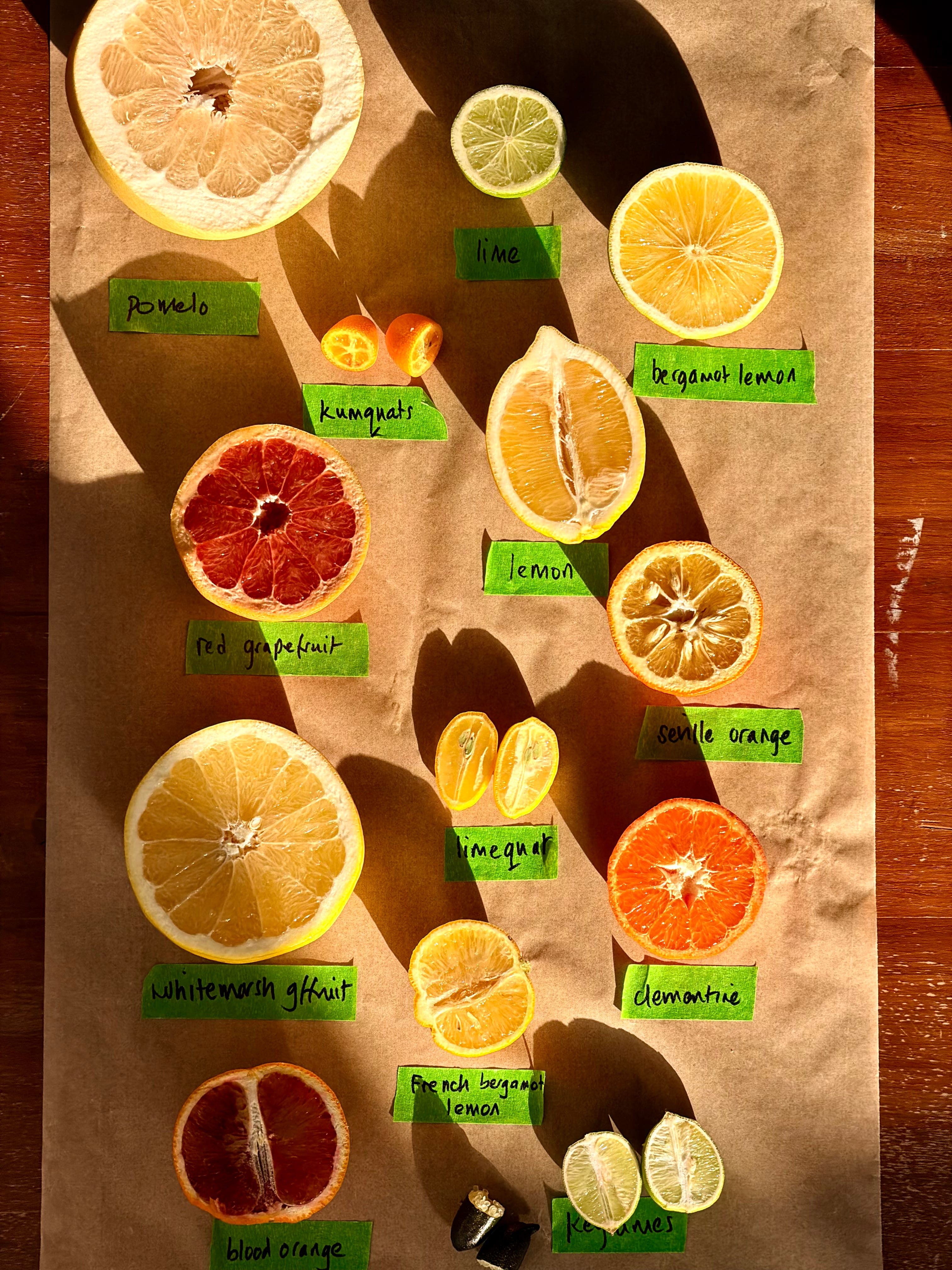
Oranges etc.
Navel oranges — Pedestrian; thick-skinned; low acidity, high sweetness; dependable.
Blood oranges — Specific varieties can include Moro and Tarocco; higher acidity vs standard oranges; raspberry-ish flavour; beautifully hued, though the shades and depth of the colours within are a mystery until you cut into them.
Seville oranges — Extreme in their bitterness and sourness; available strictly in January; thick, uneven, spongy peel; cultivated mainly in Spain. Reserved for marmalade in the UK, but used for making heady, evocative orange flower water and orange liqueurs such as Grand Marnier further afield. My Iranian friend, Bobak, told me that every year his parents buy boxes of the fruit and use the juice in their cooking where they would typically use lemon, which makes sense given Iranians’ propensity for sour flavours.