

Fundamentals #11: Lemons
The workhorse of the kitchen

This piece is being updated and thus under construction! The previous version can be found here.
Welcome to Small Wins: The Fundamentals — a series of single-subject primers with foundational recipes, exclusive to paid subscribers. Each one covers the principles and techniques that actually matter, nothing that doesn’t.

Letitia Clark-Wright, in her most recent book For the Love of Lemons1, describes the fruit as “instant kitchen ornaments” and I would have to agree: a bowl of citrus is one of the best accessories a kitchen could ask for. But lemons do so much more for us than just look pretty: in the middle of winter, when it is coldest and the colours are most muted, they bring the riot, the colour, the flavour — a true highlight in an otherwise thanklessly cold season.
Lemons are available to us year-round, such is the privileged access we have to food these days, but in truth they hit different during the winter months — they carry an extra florality.
I hope you enjoy delving into the world of lemond with me, and please do share any of your favourite lemon insights or recipes in the comments!
1. FLAVOUR + TECHNIQUE
In this section:
Flavour notes across different citrus varieties
The power of sweet’n’sour when seasoning food
A few useful techniques
Methods of preservation
Flavour notes
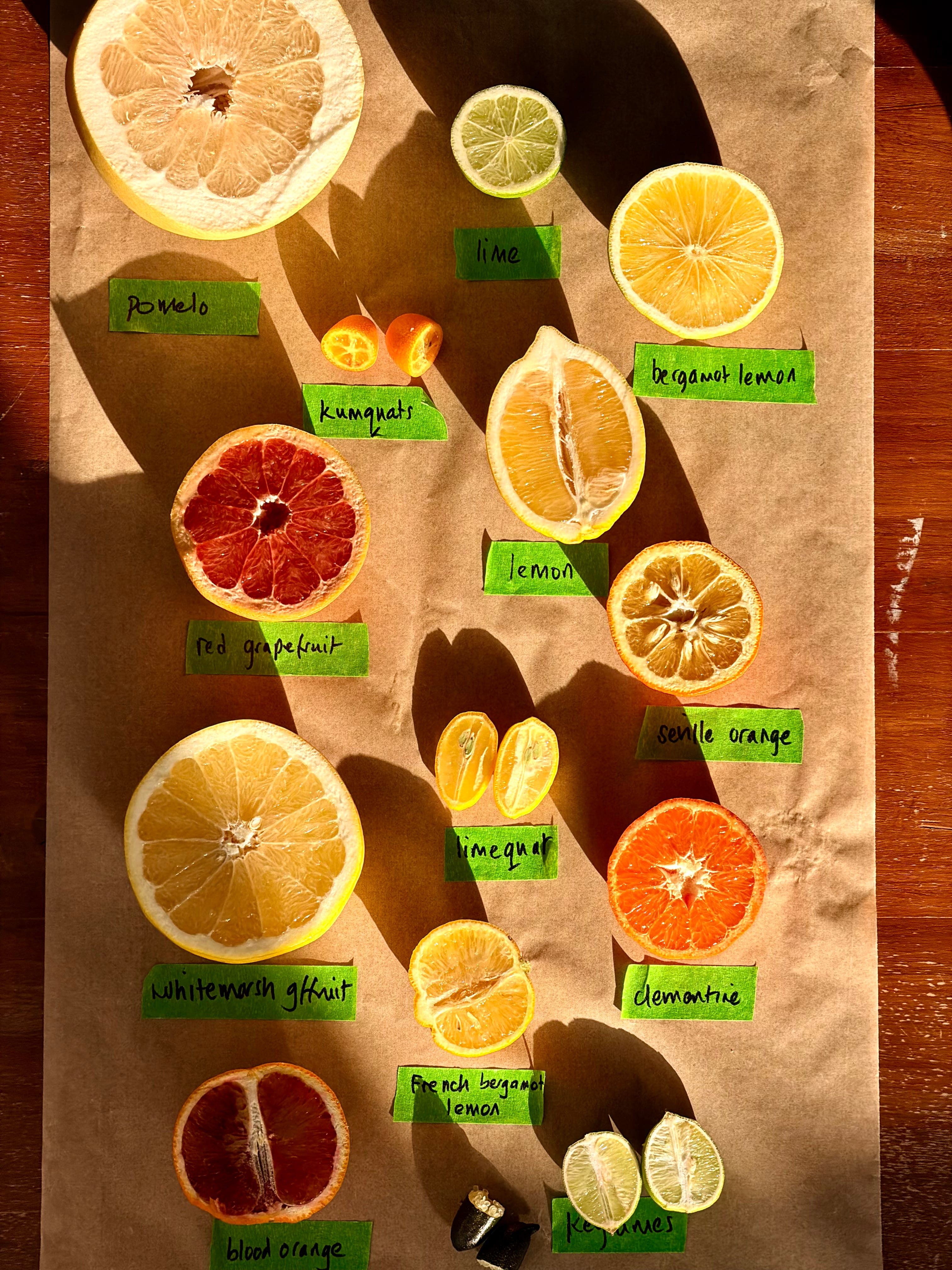
Oranges etc.
Navel oranges — Pedestrian; thick-skinned; low acidity, high sweetness; dependable.
Blood oranges — Specific varieties can include Moro and Tarocco; higher acidity vs standard oranges; raspberry-ish flavour; beautifully hued, though the shades and depth of the colours within are a mystery until you cut into them.
Seville oranges — Extreme in their bitterness and sourness; available strictly in January; thick, uneven, spongy peel; cultivated mainly in Spain. Reserved for marmalade in the UK, but used for making heady, evocative orange flower water and orange liqueurs such as Grand Marnier further afield. My Iranian friend, Bobak, told me that every year his parents buy boxes of the fruit and use the juice in their cooking where they would typically use lemon, which makes sense given Iranians’ propensity for sour flavours.